Wisdom Teeth Recovery: Complete Healing Guide
Written & Researched By
Editorial Team · product research desk
Sources: ADA guidelines, Mayo Clinic, PubMed, peer-reviewed dental literature
Published: March 31, 2026
Short answer: Wisdom teeth recovery typically takes 7 to 14 days for pain and swelling to fully resolve, with complete soft tissue healing at 3 to 4 weeks. The first 48 hours are the most uncomfortable, but each day gets measurably better if you follow proper aftercare. For a day-by-day version of this timeline, see wisdom teeth recovery day by day.
Wisdom teeth extraction is one of the most common oral surgeries performed worldwide. Whether you’re getting all four removed at once or dealing with a single impacted wisdom tooth, knowing what to expect makes the recovery process significantly less stressful.
Why Wisdom Teeth Recovery Takes Longer
Wisdom teeth extraction is more involved than a simple front-tooth extraction for several reasons:
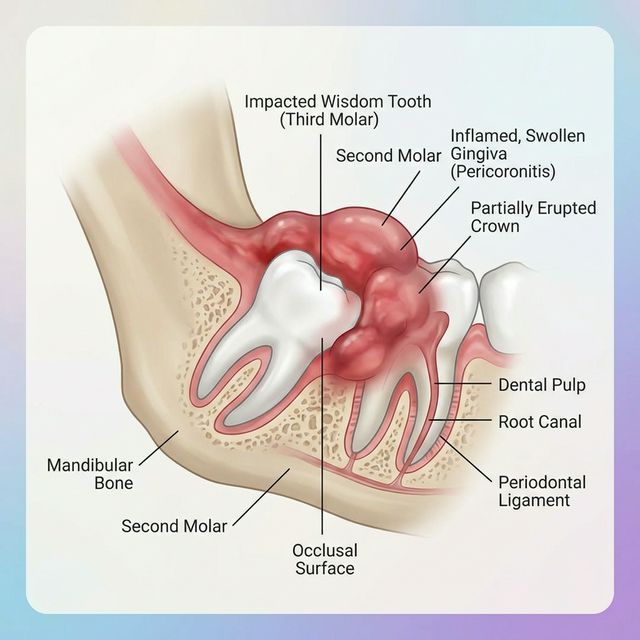
Surgical access. Impacted wisdom teeth may require cutting through gum tissue and removing bone to reach the tooth. This creates a larger wound with more tissue to heal.
Multiple extraction sites. Many patients have 2 to 4 wisdom teeth removed in one appointment, meaning multiple healing sites competing for your body’s repair resources.
Location. Wisdom teeth sit at the back of the jaw where the muscles are thickest. The masseter and pterygoid muscles in this area are directly affected by the procedure, which is why jaw stiffness is so common. Third molars also sit at the end of the arch, so the long-term space question is different from losing a chewing molar. That distinction is in teeth shifting after tooth extraction.
Deeper roots. Wisdom teeth often have longer, curved, or divergent roots that require more complex extraction techniques.
Recovery Timeline
Days 1–2: Acute Phase
This is the most uncomfortable period. Expect:
- Moderate to significant pain (manageable with medication)
- Swelling that increases, reaching peak on day 2
- Bleeding or blood-tinged saliva (should slow within 4–6 hours)
- Jaw stiffness and limited mouth opening
- Difficulty eating
Priority: Protect the blood clots, manage pain with timed medication, and apply cold therapy.
Days 3–5: Improvement Phase
Pain begins to decrease. Swelling starts going down from its peak. You may still have difficulty opening your mouth fully.
Priority: Transition from cold to warm compresses, expand your soft food diet, begin gentle salt water rinses.
Watch for: Pain that worsens instead of improving may indicate dry socket. Contact your dentist if day 3 is worse than day 2.
Days 5–10: Active Healing
Most patients feel significantly better. Stitches (if dissolvable) begin to dissolve. Jaw function is returning to normal.
Priority: Gradually return to normal activities. Continue oral hygiene with gentle brushing and appropriate mouth rinse.
Days 10–14: Near Normal
Pain is minimal or gone. Swelling is fully resolved. Most dietary restrictions can be lifted. You can typically resume exercise at this point.
Weeks 3–4: Full Soft Tissue Healing
The extraction sites are fully covered by healthy gum tissue. Bone remodeling continues beneath the surface for 3 to 6 months.
Essential Aftercare: The First 72 Hours
The first 3 days determine how smoothly the rest of your recovery goes. Focus on these priorities:
Blood Clot Protection (Critical)
The blood clots forming in your extraction sockets are the most important element of healing. Protect them by:
- No straws for at least 5 days — suction can dislodge clots
- No smoking for at least 72 hours (ideally the full first week)
- No spitting — let liquid flow out of your mouth passively
- No vigorous rinsing for 24 hours
- No prodding the extraction sites with your tongue or fingers
Pain Medication Schedule
Start pain medication before the anesthesia wears off (usually 2 to 4 hours post-surgery). Keep on a consistent schedule for the first 48 hours rather than waiting for pain to build.
For detailed medication strategy, see our complete pain management guide.
Cold Therapy
Apply ice packs to the outside of your jaw: 20 minutes on, 20 minutes off. This is most effective during the first 48 hours.
Elevated Sleep
Sleep with your head improved 25 to 45 degrees using a wedge pillow or stacked pillows. This reduces overnight swelling and morning stiffness. See our sleep positions guide for details.
Complications to Watch For
Most wisdom teeth recoveries are uncomplicated, but be aware of these potential issues:
Dry Socket (2–5% of cases, up to 30% for impacted teeth)
Intense pain starting days 3–5, visible bone in the socket, radiating pain to the ear or temple. See our complete dry socket guide.
Infection
Signs include increasing swelling after day 3, high fever (above 101°F), pus or foul-smelling discharge, and pain that doesn’t respond to medication. Requires antibiotics — contact your dentist promptly.
Nerve Damage (Rare)
Temporary numbness or tingling in the lower lip, chin, or tongue can occur when wisdom teeth roots are close to nerves. This usually resolves within weeks to months but should be reported to your oral surgeon.
Jaw Stiffness (Trismus)
Very common after wisdom teeth removal. Usually resolves within 1 to 2 weeks with gentle exercises and warm compresses.
Preparing Before Surgery
Preparation makes recovery dramatically easier:
Stock your kitchen with 5 to 7 days of soft foods. See our 7-day meal plan and blender recommendations.
Set up a recovery station at home with your medication, ice packs, water bottle, phone charger, and entertainment within arm’s reach. See our work-from-home recovery guide for setup ideas.
Arrange transportation, you’ll need a ride home after surgery, especially if you’re receiving IV sedation or general anesthesia.
Clear your schedule for at least 2 to 3 full days of rest, with reduced activity for the rest of the week.
Fill prescriptions in advance so medications are ready when you get home.
Key Takeaway
Wisdom teeth recovery is predictable and manageable with proper preparation and aftercare. Protect your blood clots, stay ahead of pain with timed medication, eat soft nutritious food, sleep improved, and give your body the rest it needs. The worst is over by day 3 for most patients, and each day after that gets measurably better.
Written and researched by the editorial team. Sources: ADA guidelines, Mayo Clinic, peer-reviewed dental literature.
Sources: American Association of Oral and Maxillofacial Surgeons; Journal of Oral and Maxillofacial Surgery.