Wisdom Teeth Recovery Timeline Day by Day: What to Expect
Written & Researched By
Editorial Team · product research desk
Sources: ADA guidelines, Mayo Clinic, PubMed, peer-reviewed dental literature
Published: May 25, 2026
Short answer: Wisdom teeth recovery follows a predictable pattern. Days 1-2 are the hardest, day 3 is usually the turning point, and most people feel close to normal by day 7-10. Full soft tissue healing takes 3-4 weeks, with bone filling in the socket over 3-6 months.
If you’re reading this the night before surgery or from the couch with ice on your face right now, here’s exactly what to expect at every stage. The broader surgical-recovery overview is in our wisdom teeth extraction guide. The non-wisdom day-by-day timeline is Tooth Extraction Recovery Day by Day. Socket appearance notes are in Tooth Extraction Healing Stages. For a product-first comfort checklist, see Day-by-Day Comfort Routine Checklist.
Before Surgery: Set Yourself Up
The recovery starts before you sit in the chair. Having everything ready at home means you can focus entirely on resting.
Stock up on:
- Soft foods for 5-7 days (see our complete 7-day soft food meal plan for specific meals)
- A gel-based jaw ice wrap or several small gel packs
- An alcohol-free oral rinse like CloSYS for after the first 24 hours
- Extra pillows or a wedge pillow for elevated sleeping
- Prescribed medications filled and ready
Arrange:
- A ride home (you cannot drive after sedation)
- 3-5 days off work or school
- Someone to stay with you for the first 12-24 hours if you had IV sedation
Day 0: Surgery Day
Your oral surgeon removes the wisdom teeth, often all four at once. If you had IV sedation or general anesthesia, you’ll be groggy and may not remember much of the first few hours.
What’s happening inside your mouth: Fresh extraction sockets are open and blood clots are forming. These clots are critical — they protect exposed bone and nerve endings and serve as the scaffolding for new tissue. Losing a clot leads to dry socket, which is painful and delays healing.
What to do:
- Bite on gauze pads for 30-45 minutes to help clots form
- Apply ice to the outside of your jaw — 20 minutes on, 20 minutes off
- Take pain medication before the anesthetic wears off (don’t wait for pain to build)
- Eat only cool, soft foods: yogurt, applesauce, ice cream
- Sip room-temperature water, no straws
- Do not rinse, spit, smoke, or use a straw for 24 hours
- Rest with your head elevated on 2-3 pillows
Expected pain level: Low to moderate (anesthesia is still wearing off). The real discomfort starts later today or overnight.
Day 1: First Full Day of Recovery
You’ll wake up sore. Your cheeks may already look puffy. This is the day to commit to doing as little as possible.
What’s happening: Blood clots are stabilizing in all four sockets. Your body’s inflammatory response is ramping up, sending white blood cells and fluid to the surgical sites. Swelling is building.
What to do:
- Continue icing — this is the most effective window for cold therapy to limit swelling
- Stay on your pain medication schedule (alternating ibuprofen and acetaminophen works well for many patients)
- Drink plenty of fluids at room temperature
- Eat soft, cool foods — mashed avocado, smoothies without a straw, broth
- Do not brush near the extraction sites
- Keep your head elevated when resting
Expected pain level: Moderate to high. This is normal. If pain medication keeps it manageable, you’re on track.
Day 2: Peak Swelling
This is typically the most uncomfortable day. Swelling hits its maximum 24-48 hours after surgery, and your face may look noticeably puffy or asymmetric.
What’s happening: Swelling peaks. This is your body working hard to heal, not a sign of something going wrong. The blood clots are maturing. Your jaw muscles may feel stiff from being held open during surgery.
What to do:
- Continue ice therapy (still effective today)
- Begin gentle warm salt water rinses if your surgeon has cleared it: 1/2 teaspoon salt in 8 ounces of warm water. Let the rinse flow passively — do not swish
- Continue soft food diet
- Stay hydrated
- Expect jaw stiffness and limited mouth opening — this is normal after having your mouth propped open for the procedure
Expected pain level: High (peak). If it’s manageable with medication, you’re doing fine.
For more on what’s normal vs. concerning at this stage, read when to worry about swelling after tooth extraction.
Day 3: The Turning Point
Most patients notice a real shift on day 3. Pain should start declining rather than increasing. If things are moving in the right direction, you’ll feel it today.
What’s happening: Your body transitions from the inflammatory phase to the repair phase. Granulation tissue (soft, pinkish-white tissue) begins forming over the blood clots. Swelling starts receding.
What to do:
- Switch from cold compresses to warm, moist heat if your surgeon recommends it
- You may be able to reduce pain medication frequency
- Add slightly more variety to your diet: scrambled eggs, oatmeal, very soft pasta
- Continue gentle salt water rinses 2-3 times daily
- Try gentle jaw opening exercises — open and close slowly, don’t force it
Warning sign: If pain increases on day 3 or 4 instead of improving, contact your oral surgeon. Worsening pain combined with a bad taste and empty-looking socket are hallmarks of dry socket.
Expected pain level: Improving. You should notice a difference from yesterday.
Days 4-5: Real Improvement
The corner has been turned. Pain is declining noticeably each day, and swelling is visibly going down. You may start feeling restless and ready to do things — which is a good sign, but don’t overdo it.
What’s happening: Granulation tissue is filling in the sockets. New blood vessels are forming. The gum edges are starting to close in over the extraction sites.
What to do:
- Most people can return to desk work or school
- Expand your diet to include foods requiring light chewing — pancakes, soft fish, well-cooked pasta
- Brush your teeth normally, but continue being careful around the extraction sites
- Keep rinsing with salt water after meals
- Avoid strenuous exercise for a few more days (elevated blood pressure can restart bleeding)
Expected pain level: Mild. Many patients stop prescription pain medication around this time and switch to over-the-counter ibuprofen as needed.
Days 5-7: Getting Back to Normal
By the end of the first week, most people feel close to their normal selves. There may be residual tenderness at the extraction sites, but it shouldn’t interfere with daily activities.
What’s happening: Gum tissue is closing over the sockets. The surface is mostly healed, though deeper layers continue repairing underneath. Jaw stiffness is improving.
What to do:
- Follow up with your oral surgeon (usually scheduled around day 7)
- Gradually reintroduce normal foods, avoiding only very hard or crunchy items near the back of your mouth
- Resume normal brushing and flossing
- Light exercise is usually fine — listen to your body
Expected pain level: Minimal. Occasional twinges or awareness of the sites, but not pain that requires medication for most patients.
Days 7-14: Residual Healing
The visible signs of surgery are mostly gone. The main remaining issues are deeper tissue healing and gradually returning to full jaw function.
What’s happening: The sockets are covered by gum tissue. Bone remodeling has begun beneath the surface. Jaw muscles that were stretched during surgery are returning to normal flexibility.
What to do:
- Eat normally, using common sense around the extraction areas
- Continue gentle jaw stretching if stiffness persists
- The extraction sites may collect food — gentle rinsing after meals helps keep them clean
Weeks 3-4: Soft Tissue Fully Healed
The gum tissue over the extraction sites is fully healed. You shouldn’t feel any discomfort. The sockets may still have slight depressions where the teeth used to be — these fill in gradually.
Months 3-6: Bone Fills In
The jawbone remodels and fills the extraction sockets completely. This happens silently, with no symptoms. By 6 months, an X-ray would show solid bone where the teeth used to be.
Factors That Slow Wisdom Teeth Recovery
Your timeline may be longer than average if:
- You smoke. Smoking is the single biggest controllable risk factor for complications. The suction pulls at clots, and nicotine restricts blood flow to healing tissue. Avoid smoking for at least 72 hours minimum, longer is better.
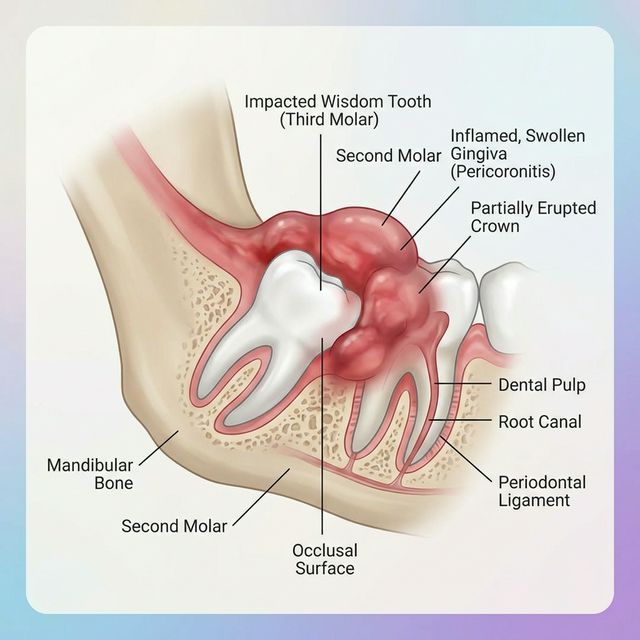
- Your teeth were impacted. Fully impacted wisdom teeth (buried under bone) require more surgical work, which means more tissue trauma and a longer recovery.
- All four were removed at once. More surgical sites means more inflammation overall.
- You have diabetes or immune conditions. These can slow wound healing systemically.
- You skip aftercare instructions. Using straws, eating hard foods too early, or skipping rinses all increase complication risk.
Quick Reference: Wisdom Teeth Recovery at a Glance
| Day | Pain | Swelling | Diet | Activity |
|---|---|---|---|---|
| Day 0 | Moderate (anesthetic) | Starting | Liquids + very soft | Rest only |
| Day 1 | Moderate-high | Increasing | Soft, cool foods | Rest, ice therapy |
| Day 2 | High (peak) | Peak | Soft foods | Rest, salt water rinse |
| Day 3 | Improving | Decreasing | Soft + warm foods | Light activity |
| Days 4-5 | Mild | Mostly gone | Soft + light chewing | Desk work OK |
| Days 5-7 | Minimal | Resolved | Near-normal | Most activities OK |
| Days 7-14 | Rare twinges | Gone | Normal diet | Full activity |
Frequently Asked Questions
How long does wisdom teeth recovery take?
Most people feel significantly better by day 5-7 and are back to normal activities. Full soft tissue healing takes 3-4 weeks. Bone remodeling in the socket continues for 3-6 months but causes no symptoms.
When can I eat normal food after wisdom teeth removal?
Soft foods for the first 3-5 days, then gradually reintroduce normal foods. Most patients eat normally by day 7-10. Avoid hard, crunchy foods near the extraction sites for 2 weeks.
Is it normal for wisdom teeth recovery to hurt more on day 2?
Yes. Day 2 is typically the peak of both pain and swelling. Your body’s inflammatory response is at full intensity. If pain is manageable with medication, this is expected. Pain that worsens after day 3, however, may indicate dry socket.
Can I go to work the day after wisdom teeth removal?
Most oral surgeons recommend 2-3 days off for a four-tooth extraction. Desk workers may return on day 3-4 if they feel up to it. Physical labor should wait until day 7 at minimum.
How do I know if I have dry socket vs. normal healing?
Normal healing: pain peaks on day 2 and improves steadily. Dry socket: pain suddenly worsens on day 3-4, radiates to the ear or temple, and you may see exposed bone in the socket instead of a dark blood clot. Read our full dry socket symptoms guide for the complete comparison.
Key Takeaway
Wisdom teeth recovery follows a clear arc: days 1-2 are the toughest, day 3 is the turning point, and each day after gets progressively better. The single most important thing you can do is protect those blood clots during the first 72 hours. No straws, no smoking, no aggressive rinsing. Follow your surgeon’s aftercare instructions, eat soft foods, keep icing, and you’ll be through the worst of it before the week is out.
Medical Disclaimer: This article is for informational purposes only and does not constitute medical advice. Always follow the specific post-operative instructions provided by your oral surgeon or dentist. If you experience severe or worsening symptoms, contact your dental provider or seek emergency care.
Written and researched by the editorial team. Sources: ADA guidelines, American Association of Oral and Maxillofacial Surgeons, Mayo Clinic, peer-reviewed dental literature.