Best Foods to Eat After Wisdom Teeth Removal: Day-by-Day Guide
Written & Researched By
Editorial Team · product research desk
Sources: ADA guidelines, Mayo Clinic, PubMed, peer-reviewed dental literature
Published: May 26, 2026
Short answer: Stick to cold or room-temperature liquids for the first 24 hours, transition to soft foods like yogurt, mashed potatoes, and scrambled eggs on days 2-3, and gradually reintroduce firmer soft foods by days 4-7. The goal is to nourish your body without disturbing the blood clots in your extraction sockets.
Wisdom teeth removal typically means four extraction sites healing at once, which makes eating considerably trickier than a single extraction. Your food choices during the first week directly affect how smoothly you heal — the right foods provide the nutrients your body needs while the wrong ones risk dislodging clots and triggering dry socket.
Day-by-Day Food Progression
Day 1: Liquids and Ultra-Soft Foods Only
Your mouth is still numb for the first few hours, and blood clots are just forming. This is the most restrictive day.
Safe options:
- Room-temperature or cool water (stay hydrated — this is your top priority)
- Lukewarm broth (not hot — let it cool until you can comfortably hold the cup against your wrist)
- Smooth applesauce
- Protein shakes or meal replacement drinks (no straws — sip from the cup)
- Plain yogurt (no chunks or granola toppings)
- Ice chips (let them melt rather than crunching)
Key rules for day 1:
- No straws under any circumstances
- No hot foods or drinks
- No chewing — anything you eat should require zero jaw movement
- Eat on the opposite side if you must use any jaw movement at all
- Don’t spit — let liquid drain passively if you need to clear your mouth
Days 2–3: Soft Foods, Minimal Chewing
The blood clots are more stable but still fragile. You can start introducing foods that require minimal jaw effort.
Safe options:
- Scrambled eggs (cook them very soft and let them cool)
- Mashed potatoes or sweet potatoes (no lumps)
- Oatmeal (prepared smooth, not thick or chunky)
- Cream of wheat
- Mashed avocado
- Banana (mashed with a fork, not bitten into)
- Cottage cheese
- Pudding or custard
- Hummus
- Lukewarm soup (blended smooth — no chunks of meat or vegetables)
Protein focus: Your body needs protein to build new tissue. Scrambled eggs, Greek yogurt, cottage cheese, and protein shakes are your best sources during this phase. Aim for at least 50-60 grams of protein per day if possible.
Days 4–5: Firmer Soft Foods
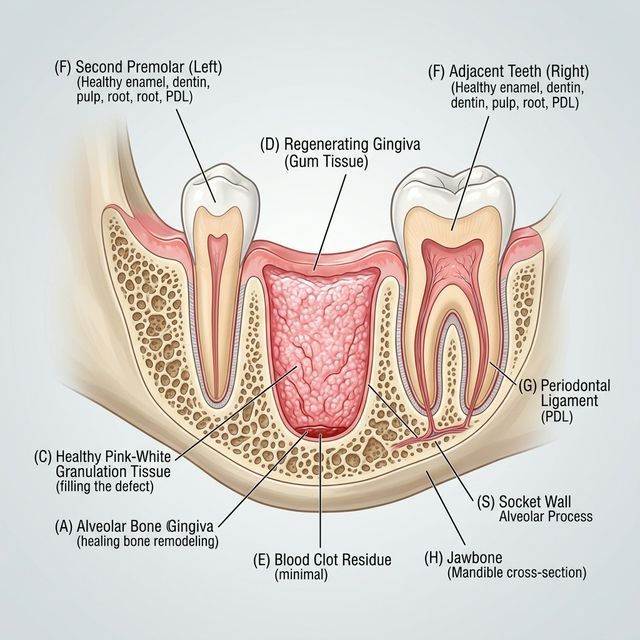
Granulation tissue is forming over the sockets. You can gradually introduce foods that require gentle chewing.
Safe options:
- Pasta (cooked very soft, with smooth sauce)
- Soft fish (baked or steamed, flaked with a fork)
- Well-cooked, soft vegetables (steamed carrots, squash, sweet potato)
- Pancakes or soft waffles (cut into small pieces)
- Soft bread (no crust, no seeds)
- Mac and cheese
- Mashed beans or lentils
- Soft rice
- Ripe melon or soft berries
Temperature: You can resume warm (not hot) foods by day 4. Test the temperature on your lip first — if it’s comfortable there, it’s fine for your mouth.
Days 5–7: Gradual Return to Normal
Most patients can handle a wider variety of foods by day 5, though hard, crunchy, or sharp foods should still be avoided.
Still avoid:
- Chips, pretzels, and crackers (sharp edges can poke the healing sockets)
- Nuts and seeds (small pieces get trapped in socket holes)
- Popcorn (kernels are especially problematic)
- Raw crunchy vegetables (carrots, celery)
- Hard bread or toast
- Spicy foods (can cause burning irritation at the wound sites)
- Acidic foods like citrus and tomato sauce (irritates open tissue)
For a complete week-by-week meal plan, check out our soft food meal plan with specific recipes and shopping lists.
The 10 Best Individual Foods for Wisdom Teeth Recovery
Based on nutritional value, ease of eating, and patient popularity:
-
Greek yogurt — high protein, smooth texture, cooling on sore gums. Choose plain or lightly flavored (avoid versions with fruit chunks or granola).
-
Scrambled eggs — one of the best protein sources you can eat with minimal chewing. Cook them low and slow for the softest texture.
-
Mashed sweet potatoes — packed with vitamin A, vitamin C, and potassium, all of which support immune function and tissue repair.
-
Bone broth — provides protein, collagen, and electrolytes. Let it cool to lukewarm temperature before sipping.
-
Avocado — healthy fats, potassium, and vitamin K in an ultra-soft package. Mash it and eat with a spoon.
-
Smoothies — blend fruit, yogurt, protein powder, and spinach for a nutrient-dense meal. Eat with a spoon or sip directly from a wide glass — never use a straw.
-
Mashed potatoes — comforting, easy to eat, and a good vehicle for mixing in butter or gravy for extra calories when your appetite is low.
-
Cottage cheese — soft, high in protein, and requires no preparation. A reliable option when cooking feels like too much effort.
-
Oatmeal — fiber, iron, and slow-releasing carbohydrates. Prepare it thin and smooth rather than thick and chunky. Let it cool.
-
Banana — naturally soft, easy to mash, provides potassium and natural sugars for quick energy when your appetite is low.
Nutrition Tips for Faster Healing
Your body is doing significant repair work after four extractions. Giving it the right raw materials speeds the process:
Protein
Protein provides the amino acids your body uses to build new tissue. Aim for protein at every meal: eggs, yogurt, protein shakes, cottage cheese, or soft fish. Research in Nutrition in Clinical Practice shows that inadequate protein intake during wound healing extends recovery time.
Vitamin C
Vitamin C is essential for collagen synthesis — the structural protein that forms the scaffold of new tissue. Good soft sources include mashed strawberries, smoothies made with citrus (after day 3 when acidity is less of a concern), and vitamin C supplements if your dentist approves.
Zinc
Zinc plays a critical role in immune function and cell division during wound healing. Soft sources include yogurt, scrambled eggs, and oatmeal. Most multivitamins also contain adequate zinc.
Hydration
Dehydration slows healing and makes pain feel worse. Aim for at least 8 cups of water per day. If plain water feels unappealing, flavor it with a small amount of non-acidic fruit or try coconut water for electrolytes.
Calories
Many patients under-eat during the first few days because eating is uncomfortable and options feel limited. If you’re struggling to consume enough, add calorie-dense additions: butter in mashed potatoes, olive oil drizzled on soft foods, full-fat dairy instead of low-fat, or a meal replacement shake between meals.
Foods That Cause Problems (and Why)
Understanding why certain foods are restricted helps you make better judgment calls:
| Food | Risk |
|---|---|
| Chips, crackers, toast | Sharp edges scratch or puncture healing tissue |
| Nuts and seeds | Small pieces lodge in extraction sockets, cause infection |
| Popcorn | Husks embed in socket holes, nearly impossible to remove |
| Spicy foods | Chemical irritation of open wounds, burning sensation |
| Citrus and tomato | Acidity irritates exposed tissue |
| Sticky candy | Pulls at healing tissue, sticks in sockets |
| Hard raw vegetables | Require forceful chewing that strains healing jaw |
What About Ice Cream?
Ice cream is one of the most commonly recommended post-extraction foods, and for good reason: it’s soft, it’s cold (which helps with swelling), and it’s one of the few things that actually sounds appealing when your mouth hurts.
A few guidelines:
- Choose smooth flavors — avoid anything with nuts, cookie chunks, toffee pieces, or hard candy mix-ins
- Wait until anesthesia wears off — you need to be able to feel temperature to avoid biting injuries
- Don’t overdo the sugar — sugar feeds oral bacteria, so balance ice cream with protein-rich options
- Frozen yogurt and sorbet work too — slightly lower sugar options if you’re concerned about bacterial growth
Managing Limited Jaw Opening
After wisdom teeth removal, many patients can barely open their mouths wide enough to fit a spoon. This jaw stiffness (trismus) is normal and typically improves over the first week. For tips on managing jaw stiffness and exercises to gently restore your range of motion, see our jaw stiffness guide.
In the meantime, use a baby spoon or small teaspoon, and consider liquid meals that you can sip rather than spoon into your mouth.
When to Eat Solid Food Again
The transition back to normal eating is gradual, not a single moment. Most patients follow this general timeline:
- Week 1: Soft foods only
- Week 2: Soft-to-medium foods, gentle chewing
- Week 3: Most normal foods, avoiding very hard or crunchy items
- Week 4+: Full normal diet for most patients
For a detailed guide on this transition, read when can I eat solid food after tooth extraction.
Frequently Asked Questions
Can I eat ramen noodles after wisdom teeth removal?
Yes, starting around day 3-4. Cook the noodles until they’re very soft (overcooked by normal standards), let the broth cool to lukewarm, and cut or break the noodles into short pieces so you don’t need to slurp them. Slurping creates suction that can disturb blood clots.
When can I eat a burger after wisdom teeth removal?
Most patients can handle soft foods like a burger around days 10 to 14, depending on healing progress. Start with a very soft burger, cut into small pieces, and chew slowly on the front teeth or the side farthest from the extraction sites. Avoid hard toppings like raw onion or crispy lettuce.
Is it okay to eat spicy food after wisdom teeth removal?
Wait at least 7 days. Capsaicin and other spice compounds cause a burning sensation on open wounds and can increase inflammation. When you reintroduce spicy food, start mild and increase gradually.
Should I take vitamins during recovery?
A standard multivitamin is generally helpful, especially if your food intake is limited during the first few days. Vitamin C and zinc are particularly relevant for wound healing. Ask your dentist before adding any supplements, as some (like vitamin E) can increase bleeding.
What if I accidentally ate something crunchy?
Don’t panic. One accidental chip or cracker doesn’t guarantee a complication. Gently rinse with warm salt water (after the first 24 hours), check the extraction sites in a mirror for any visible changes, and monitor for increased pain over the next day or two. If pain worsens or you notice signs of dry socket, contact your dentist.
Key Takeaway
The first 48 hours are the most restrictive — cold liquids and ultra-soft foods only. After that, you can gradually expand your options each day. Focus on getting enough protein, staying hydrated, and avoiding anything hard, crunchy, spicy, or acidic during the first week. Most patients are back to their normal diet by week 3 to 4. Your recovery meals don’t need to be boring — they just need to be soft.
Written and researched by the editorial team. Sources: ADA guidelines, Mayo Clinic, peer-reviewed dental literature.
Sources: American Association of Oral and Maxillofacial Surgeons; Nutrition in Clinical Practice; American Dental Association.