Post-Extraction Travel Kit: What to Pack for Recovery
Written & Researched By
Editorial Team · product research desk
Sources: ADA guidelines, Mayo Clinic, PubMed, peer-reviewed dental literature
Published: March 31, 2026
Short answer: Pack portable cold therapy, pain medication, soft snacks, a water bottle, oral care supplies, and gauze. Whether you’re going back to work, running errands, or actually traveling during recovery, having these essentials on hand means you’re never caught without comfort options.
Most tooth extraction recovery plans are designed around being at home. But life doesn’t always allow for a full week on the couch. If you need to be mobile during your recovery, even if it’s just going to the office or picking up kids, a prepared kit makes a big difference.
The Essential Post-Extraction Travel Kit
Pain Management
What to pack:
- Your prescribed or over-the-counter pain medication (ibuprofen, acetaminophen) in a pill organizer
- A small timer or phone alarm set for your next dose
- A pocket-sized medication log if you’re rotating between ibuprofen and acetaminophen
Why it matters: Pain can escalate quickly, especially in the first 3 days. If you’re away from home when your next dose is due, skipping it means playing catch-up once you get back, and catching up with pain is harder than staying ahead of it.
Cold Therapy
What to pack:
- 2 to 3 instant cold packs (squeeze-to-activate, no freezer needed)
- A thin bandana or cloth barrier for your skin
Why it matters: Cold therapy during the first 48 hours significantly reduces swelling. Instant cold packs are the portable solution, activate one whenever you feel throbbing or when you have 20 minutes to ice. A reusable jaw ice wrap is better for home use. See our ice pack buying guide for more options.
Soft Food Snacks
What to pack:
- Individual yogurt cups or squeezable yogurt pouches
- Applesauce pouches (designed for kids, perfect for adults too)
- A protein shake or smoothie in a sealed cup
- A small container of mashed avocado
- Pudding cups
- A plastic spoon
Why it matters: When you’re hungry and healing, your options are limited. Having soft, room-temperature snacks prevents the temptation to eat something you shouldn’t. Protein is especially important, it supports tissue repair and keeps your energy stable.
Hydration
What to pack:
- A refillable water bottle (not a straw bottle, avoid suction during the first week)
- A bottle of room-temperature water for mixing salt rinse
Why it matters: Dehydration slows healing and makes pain medication less effective. Having water within reach reminds you to sip regularly. Avoid straws entirely during the first 5 days, the suction can dislodge your blood clot and cause dry socket.
Oral Care
What to pack:
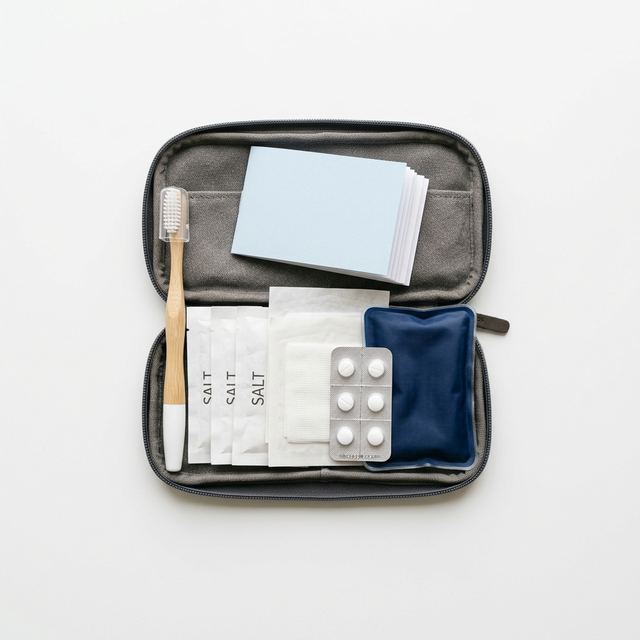
- A small container with pre-measured salt (1/2 teaspoon portions in tiny bags or a pillbox)
- Your water flosser if cordless
- Alcohol-free mouth rinse in a travel-size bottle
- Extra gauze squares (4 to 6) in a zip-lock bag
- A compact mirror for checking the extraction site
Why it matters: After eating soft food away from home, you need a way to clean your mouth. Pre-portioned salt packets eliminate guesswork, just add warm water and rinse gently.
Comfort Items
What to pack:
- A small neck pillow for head elevation during naps or rest
- Lip balm (dry lips are common after mouth breathing during recovery)
- Tissues
- A dark-colored hand towel (in case of minor bleeding or drool)
- Headphones (distracting yourself from discomfort helps)
Packing the Kit
Container option 1: A toiletry bag or small pouch. Inexpensive, zip-closed, and fits in any backpack or tote. Dedicated just to recovery essentials.
Container option 2: A small insulated lunch bag. Keeps yogurt and smoothies cold for a few hours. Add a small ice pack (the reusable kind) for extra cold time.
Container option 3: A zip-lock bag. Minimal. If you’re just going to work or a short errand, throw the essentials in a gallon-size bag and go.
Scenario-Specific Tips
Going Back to Work (Days 3-5)
Your kit focus: pain medication on schedule, soft snacks for lunch, salt water rinse after eating, and instant cold packs if still within the 48-hour window.
Office tip: Store backup medication, gauze, and a salt packet in your desk drawer. Tell a trusted coworker what’s going on so someone nearby is aware if you need help.
Running Errands (Days 1-3)
Your kit focus: pain medication, 1 to 2 instant cold packs, water bottle (no straw), and gauze.
Car tip: Keep the kit in your car’s center console or passenger seat. If you need to ice, you can do it in a parking lot between stops.
Air Travel (Days 7+)
Wait at least 7 days before flying if possible, cabin pressure changes can cause discomfort at the extraction site. If you must fly sooner, consult your dentist.
TSA-friendly packing:
- Medication in original labeled containers
- Instant cold packs are allowed (they’re dry chemical, not gel)
- 3.4 oz or smaller bottles for liquid mouth rinse
- Yogurt pouches may need to go through the food screening lane
- Recovery pillow counts as a personal item
Overnight Stays (Days 3+)
Add to your kit:
- Your wedge pillow or extra pillows for head elevation
- A full-size salt container
- Enough medication for the duration plus one extra day
- A dark towel for your pillow
Printable Checklist
Use this as your packing list:
- Pain medication + dosing schedule
- 2-3 instant cold packs
- Thin cloth or bandana for ice barrier
- Soft snacks (yogurt, applesauce, pudding, protein shake)
- Water bottle (non-straw)
- Pre-measured salt packets
- Travel-size alcohol-free mouth rinse
- Gauze squares (4-6 pieces)
- Compact mirror
- Lip balm
- Neck pillow
- Dark towel
- Plastic spoon
- Tissues
Key Takeaway
A 10-minute packing session saves hours of discomfort. You don’t need to stay glued to your couch for a week, you just need to bring your recovery essentials with you. Pain medication, cold therapy, soft snacks, water, and basic oral care supplies fit in a small bag and cover every scenario from a work day to overnight travel.
Written and researched by the editorial team. Sources: ADA guidelines, Mayo Clinic, peer-reviewed dental literature.