Molar Extraction vs. Wisdom Tooth Removal: Key Differences
Written & Researched By
Editorial Team · product research desk
Sources: ADA guidelines, Mayo Clinic, PubMed, peer-reviewed dental literature
Published: March 31, 2026
Written & Researched By
Editorial Team · product research desk
Sources: ADA guidelines, Mayo Clinic, PubMed, peer-reviewed dental literature
People often assume that a molar extraction and a wisdom tooth removal are roughly the same experience. They are not — in several important ways.
The confusion is understandable. Both involve removing a back tooth. But the type of tooth, its location, its purpose, and how your jaw responds to its loss all differ significantly. Understanding these differences helps you prepare for the right recovery and make informed decisions about what happens next.
Surgical Complexity
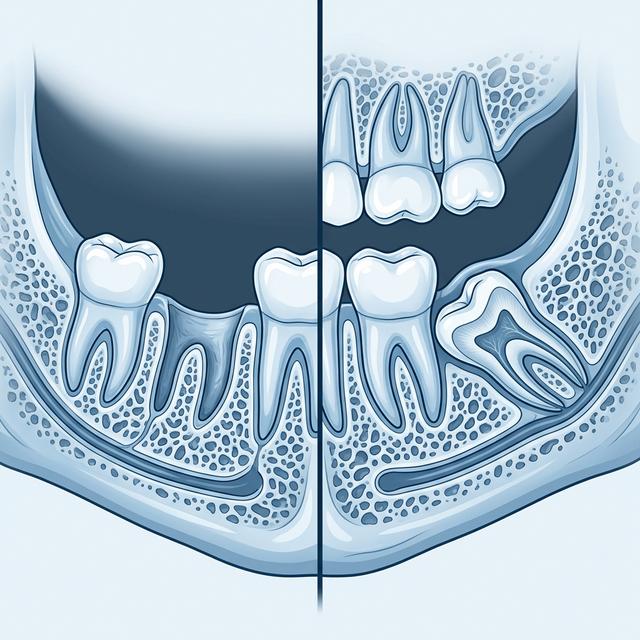
Wisdom Teeth (Third Molars): Wisdom tooth extractions are frequently among the most surgically complex outpatient dental procedures. Because wisdom teeth often grow impacted — trapped beneath the gums, pushing against adjacent teeth, or angled horizontally — removing them often requires:
- Incisions into the gum tissue
- Drilling away surrounding bone
- Breaking the tooth into pieces for removal
- Multiple sutures to close the site
Even wisdom teeth that appear “simple” on the surface may have curved or hooked roots that complicate extraction.
Standard Molars (First and Second Molars): Unless a standard molar is severely decayed, fractured below the gumline, or has very curved roots, it can often be removed via a simple extraction, loosening with elevators and removing with forceps, without any incision. This is significantly less traumatic to the surrounding tissue.
The exception: A broken or severely decayed molar that requires surgical technique to extract in pieces. In these cases, the surgical complexity may match a wisdom tooth removal.
Recovery Time
| Wisdom Teeth | Standard Molars | |
|---|---|---|
| Return to work (desk) | 3–5 days | 1–3 days |
| Soft food diet | 7–14 days | 3–7 days |
| Swelling resolved | 5–10 days | 3–5 days |
| Socket fully healed | 3–4 weeks | 2–3 weeks |
| Bone fully remodeled | 3–6 months | 6–12+ months |
Wisdom tooth recovery tends to run longer because of the surgical nature of the procedure and the location at the back of the jaw, where blood supply is slightly different.
Pain Levels
Wisdom Teeth: Expect higher pain levels, especially for impacted extractions. The tissue and bone trauma from surgical removal is significant. Most patients require prescription pain management for 3–5 days and have noticeable facial swelling with potential bruising.
Standard Molars: Pain is generally mild to moderate and manageable with over-the-counter ibuprofen and acetaminophen for most simple extractions. The absence of large-scale tissue trauma makes recovery noticeably less painful.
Dry Socket Risk
Dry socket, when the blood clot dislodges before the socket heals, is one of the most painful complications of any extraction. But the risk is not equal:
- Wisdom teeth: Significantly higher dry socket risk, particularly lower wisdom teeth. The risk ranges from 5–30% depending on individual factors.
- Standard molars: Lower risk, typically 1–5% for simple extractions.
Factors that increase dry socket risk for both include smoking, oral contraceptive use, poor blood supply to the area, and trauma during the extraction.
Bone Loss: The Critical Difference
This is where losing a standard molar becomes significantly more consequential than losing a wisdom tooth.
Standard Molars, Bone Loss Is a Major Concern: When a functional tooth is removed, the jawbone in that location no longer receives stimulation from chewing forces. Without this stimulation, the bone begins to resorb (shrink) within weeks of the extraction. Over 1–2 years:
- The bone height and width decrease measurably
- Adjacent teeth may drift or tip into the empty space
- The opposing tooth (above or below the gap) may super-erupt, growing further out of the gumline because it no longer has a chewing partner
This is why most dentists recommend replacing a lost molar with a bridge, partial denture, or ideally a dental implant.
Wisdom Teeth, No Bone Loss Concern: Wisdom teeth are located at the very back of the jaw and serve no critical structural function in most modern mouths. Their absence does not affect adjacent tooth alignment or jawbone integrity in any meaningful way.
Does a Molar Extraction Require a Bone Graft?
Standard Molars: Often yes, if you plan to replace the tooth with an implant.
A bone graft placed at the time of extraction (called a socket preservation graft) deposits bone material directly into the empty socket. This preserves the bone volume and density that an implant will later need to anchor into. Without a socket preservation graft, the natural bone resorption process may leave insufficient bone for a successful implant 6–12 months later.
If you are not planning to get an implant and will use a bridge or denture instead, a bone graft is usually not necessary.
Wisdom Teeth: No. Since wisdom teeth are almost never replaced, there is no reason to preserve the bone in that area. A bone graft at a wisdom tooth site is rare.
Cost Comparison
| Wisdom Teeth | Standard Molars | |
|---|---|---|
| Simple extraction | $200–$500 | $150–$300 |
| Surgical extraction | $400–$900 per tooth | $300–$700 |
| General anesthesia | Often required | Rarely required |
| Bone graft | Not needed | $400–$800+ if implant planned |
| Implant | Not applicable | $3,000–$5,000 |
Important: While wisdom tooth removal is more expensive at the time of surgery, losing a standard molar carries a much higher lifetime cost, bone grafts, implants or bridges, and potential orthodontic correction from shifting teeth can make a single molar loss a $5,000+ treatment event over time.
The Bottom Line
Wisdom tooth removal is more surgically complex and more painful in the short term, but there are no long-term consequences once you recover. You simply no longer have those teeth.
Standard molar extraction is often less complex in the short term but comes with significant long-term implications, bone loss, tooth shifting, bite changes, that make replacement planning an important conversation to have with your dentist before the extraction, not after.
If you are losing a standard molar, start that conversation early. The bone graft decision is made at the time of extraction, and waiting until later often makes implant treatment more difficult and expensive.
This article is for informational purposes only and does not constitute medical advice. Consult your dentist or oral surgeon for recommendations specific to your situation.
We evaluate health information and products independently. To learn more about our editorial standards, read our Editorial Policy.